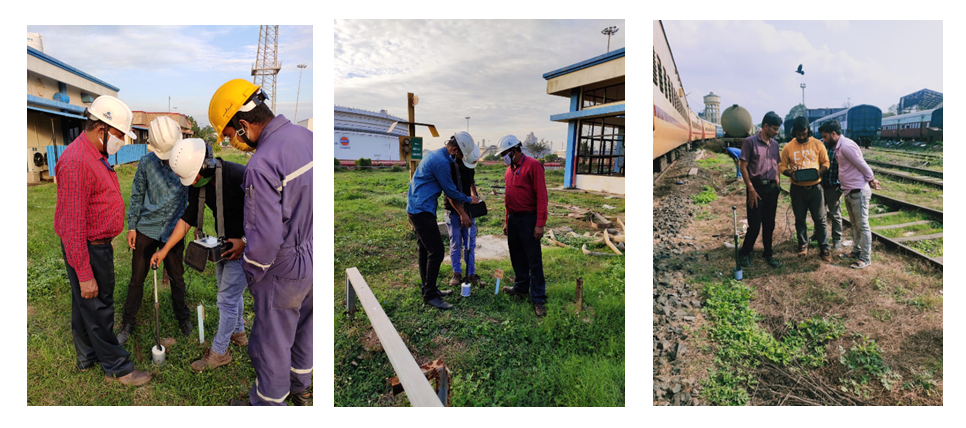
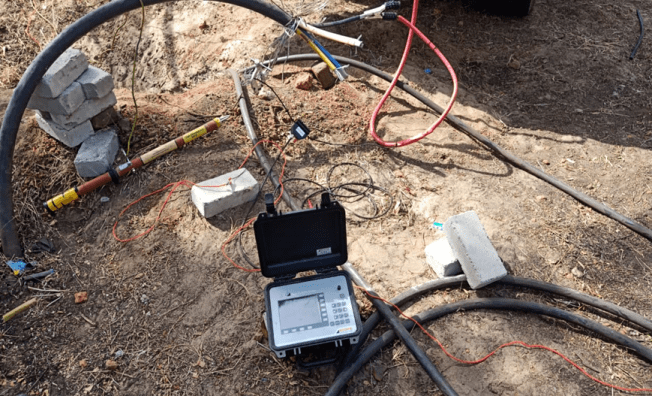
One of the major thermal power plants from Northern India was living with the problem of an undetected cable fault for over two years on their LT Cable. Since this cable was used for Street lighting and had a backup line which used to power up the street lights, this faulty cable went into the …
Empower your feeder line Operations & Maintenance using OrxaGrid’s Cable Health Indexing tool in Asset Management
Now with OrxaGrid's asset management portfolio, you can do so much more. Credits: https://media.licdn.com/dms For electrical manufacturing companies, ensuring the health and longevity of their cable infrastructure is paramount. Ageing cables pose a significant risk, leading to costly downtime, safety hazards, and reputational damage. Traditional inspection methods are often tedious, time-consuming, and prone to human …
Insulation health diagnosis using IR Tester
With an increase in demand for electrical energy day by day, electrical installations, structures and systems are also increasing. It is very important to maintain these systems and equipment safely and efficiently. These requirements of the electrical system are fulfilled by the insulating material. The property of insulating material to oppose the flow of current …
Continue reading "Insulation health diagnosis using IR Tester"
Prelocation of Cable Faults Using Voltage Decay Method
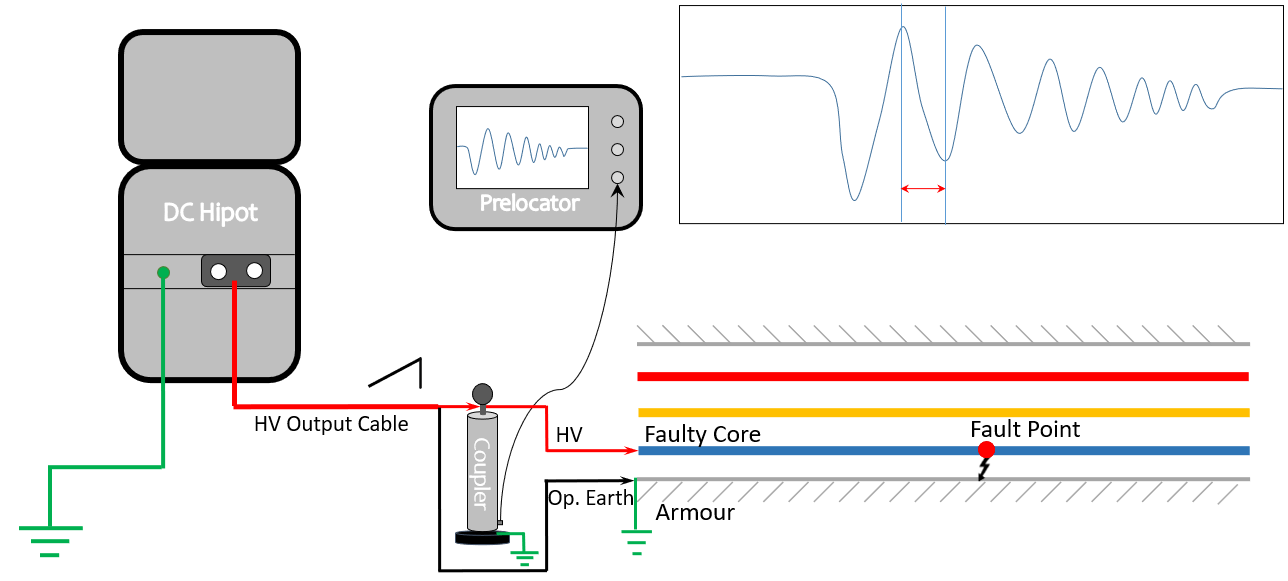
Introduction In the previous blog, we discussed the ICM method used for prelocation of the Insulation Failure / High Resistance faults. To find out the distance of insulation failure / Very High Resistance faults in HV to EHV power cables, in which the breakdown voltage is greater than the Surge Generator's voltage the Voltage Decay …
Continue reading "Prelocation of Cable Faults Using Voltage Decay Method"
Prelocation of Cable Faults using Secondary Impulse Method
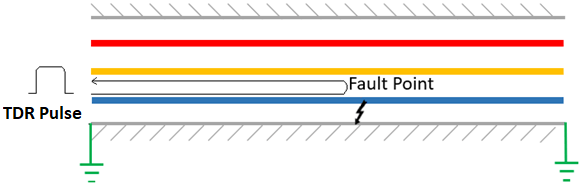
Introduction In our earlier blogs, we discussed the prelocation using the Time Domain Reflectometry (TDR) method, for faults like low resistance, short circuit, ingress of moisture, and open circuit faults. Insulation failure / High Resistance faults cannot be determined using a low voltage source of a TDR or Prelocator instrument. In Mid Voltage (MV) to …
Continue reading "Prelocation of Cable Faults using Secondary Impulse Method"
Prelocation of Cable Faults using Time Domain Reflectometer Method
In a three-part series on underground cable fault location, we discussed various aspects of cable fault location – from types and causes of cable faults, methodology for identifying cable faults and finally, we illustrated the step-wise process for detecting faults in underground cables. We also introduced the Time Domain Reflectometer (TDR) method for identifying underground …
Continue reading "Prelocation of Cable Faults using Time Domain Reflectometer Method"
Hi-Pot Testing : What, Why and How
The electrical grid network is oftentimes classified as critical infrastructure. For electrical utilities, any disruption which leads to major downtime is a major source of revenue loss. Furthermore, policymakers today expect network operators to deliver 24/7 electricity to the retail consumers. As a result, it is important that electrical equipment have the highest standards of …
Importance of Velocity of Propagation in TDR Method for UG cable fault location
In the previous blog, we concluded our three-part series on underground cable fault location. To review, we discussed the types of cable faults, methodology for locating cable faults, fault finding through Pre-location techniques and cable route tracing, pinpointing, cable identification and repair and re-test. In Part-2 of our 3 part series, we introduced the methodology …
Continue reading "Importance of Velocity of Propagation in TDR Method for UG cable fault location"
Step 2 in Underground Cable Fault Location : Cable Route Tracing, Pinpointing, Cable Identification, Repair & Re-test
In the previous blog we discussed the principle of cable fault pre-location and noted the criticality of this technique towards reducing the time taken to identify location of the fault. We also deliberated upon the various cable fault pre-location techniques. In this blog post, we will continue our ongoing discussion on cable fault location by …
Step-1 in underground cable fault finding: Pre-location Techniques
In the previous blog post, we discussed how electrical utilities are using underground cables to gain a higher degree of reliability. However, underground cable faults can lead to a long downtime, which can further lead to a major revenue loss for electricity utilities. We also discussed the various causes of cable faults and the different …
Continue reading "Step-1 in underground cable fault finding: Pre-location Techniques"